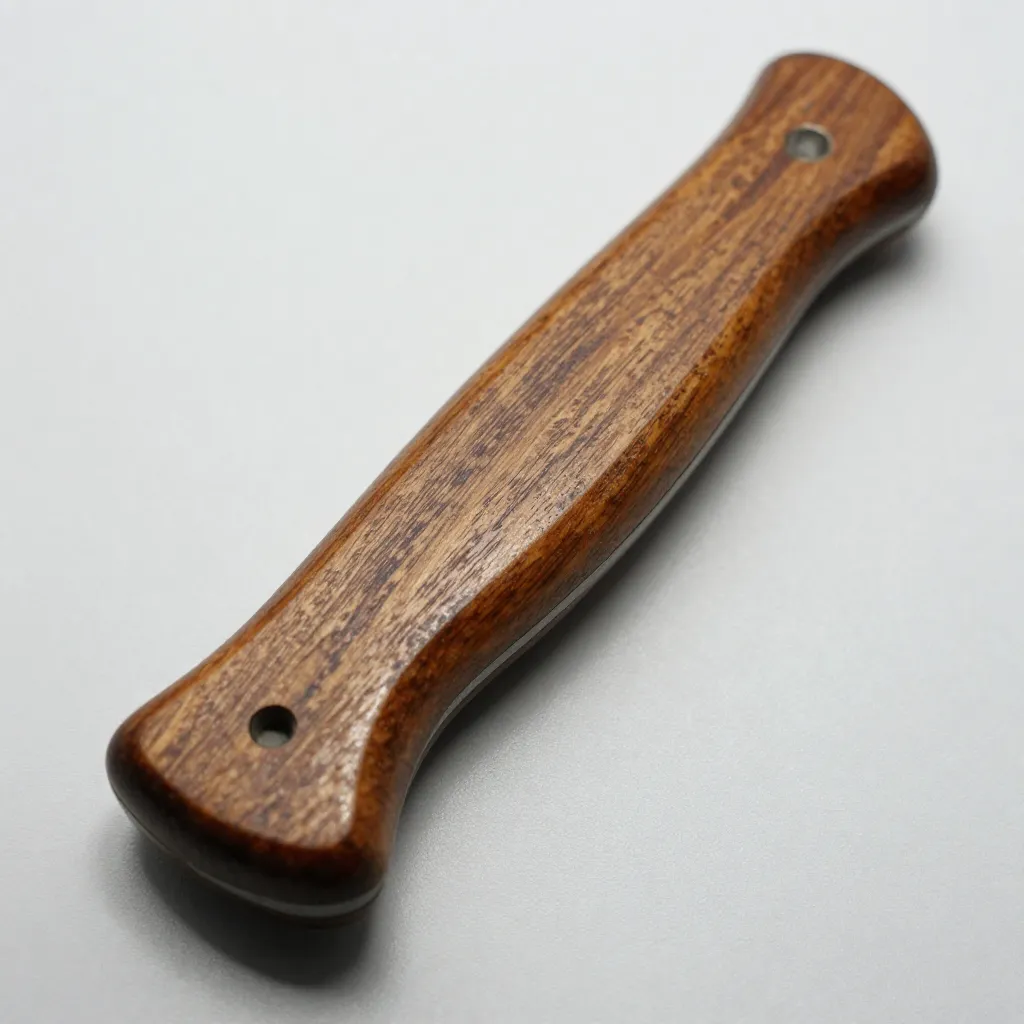
Precision Handle Restoration
Transforming kitchen tools through expert craftsmanship and material science
Craftsmanship Meets Engineering
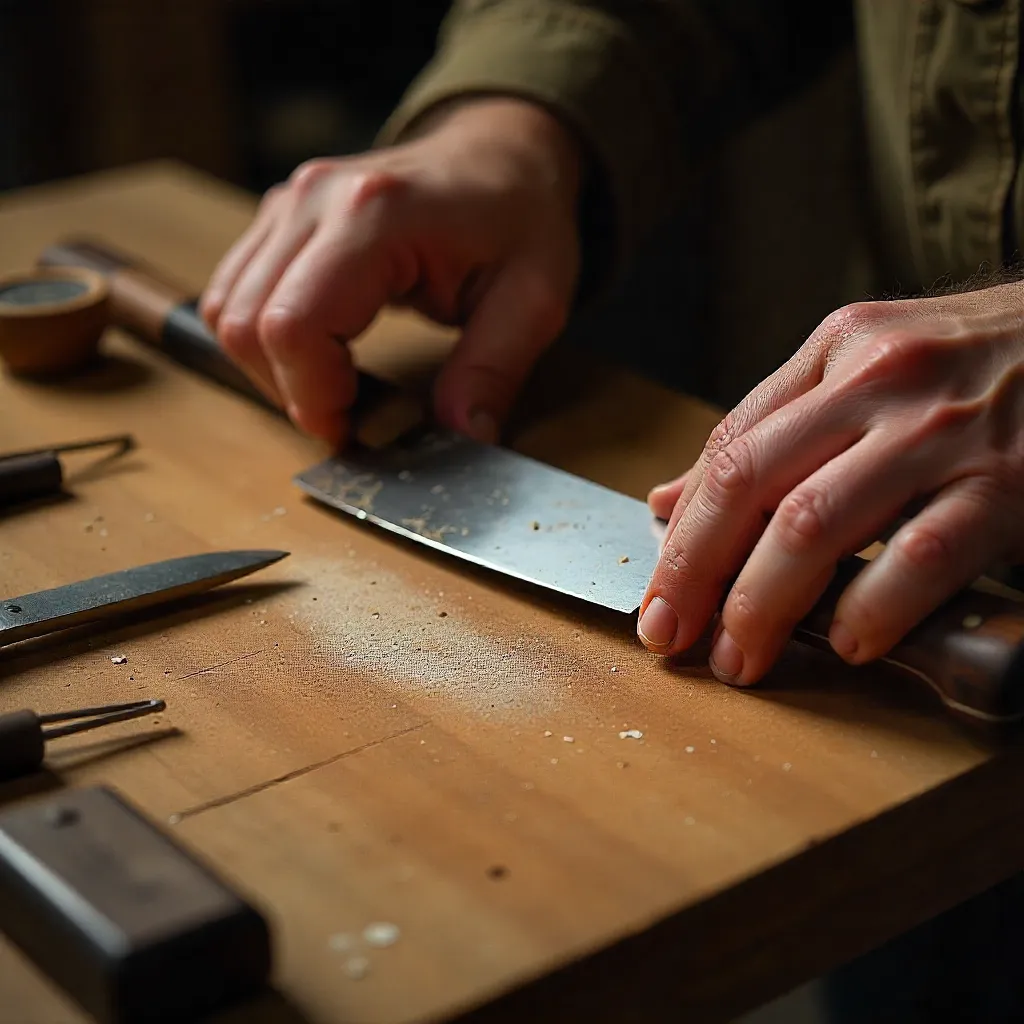
Material Selection
Every restoration begins with careful analysis of wood grain, moisture content, and structural integrity. We work with stabilized composites and natural hardwoods to ensure longevity.
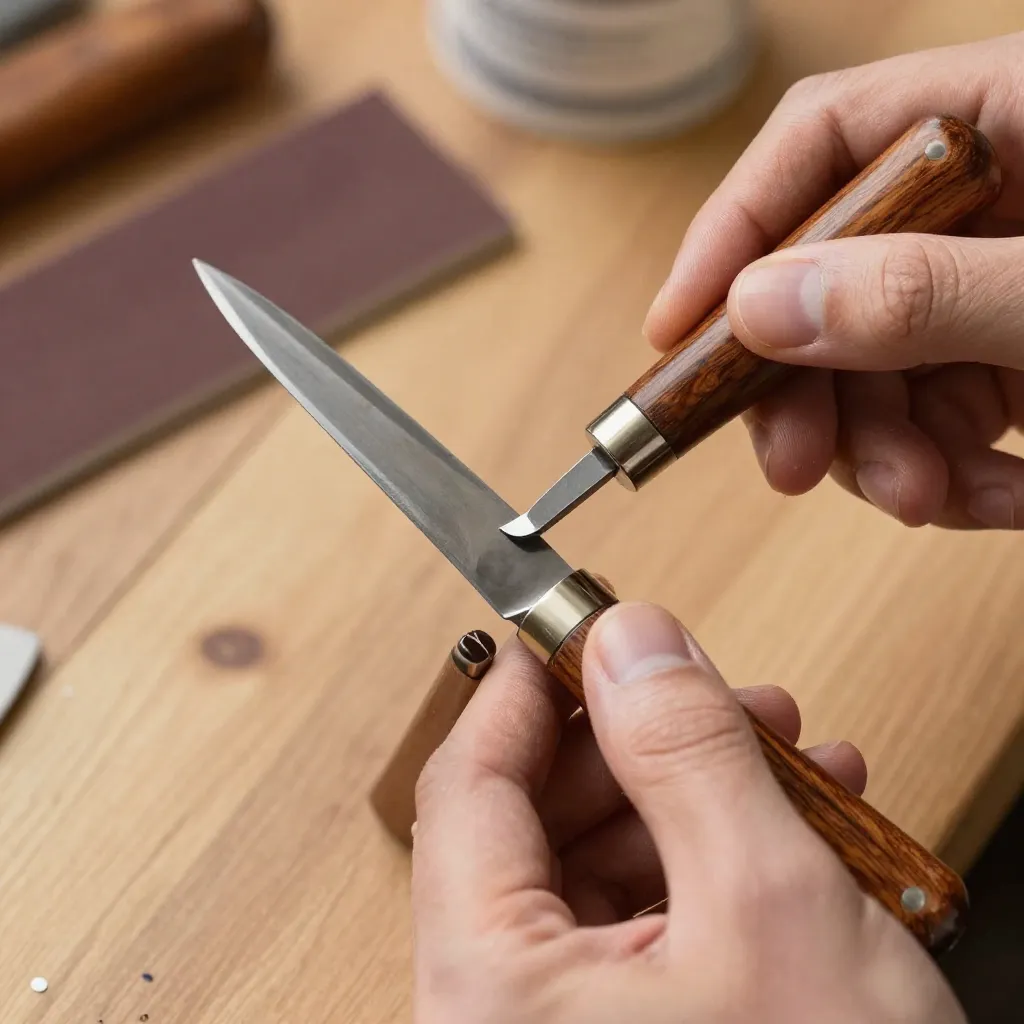
Precision Shaping
Each handle is shaped to match the original ergonomics while improving grip geometry. Our process considers hand kinematics and pressure distribution patterns.
Restoration Methodology
Complete evaluation of tang condition, wood stability, and pin integrity.
Stabilization and moisture control to prevent future warping or cracking.
Precise fitting, pinning, and surface finishing for optimal tactile response.
Advanced Composite Materials
Stabilized Wood
Resin-infused hardwoods with enhanced durability and moisture resistance. Maintains natural aesthetics while providing structural stability.
Natural Hardwood
Traditional materials including walnut, maple, and cherry. Selected for grain pattern, density, and long-term performance characteristics.
Hybrid Composites
Innovative combinations of wood and synthetic materials for specialized applications requiring specific performance metrics.
Metal Accents
Brass and stainless steel pins and bolsters for structural reinforcement and visual contrast in finished handles.
Technical Specifications
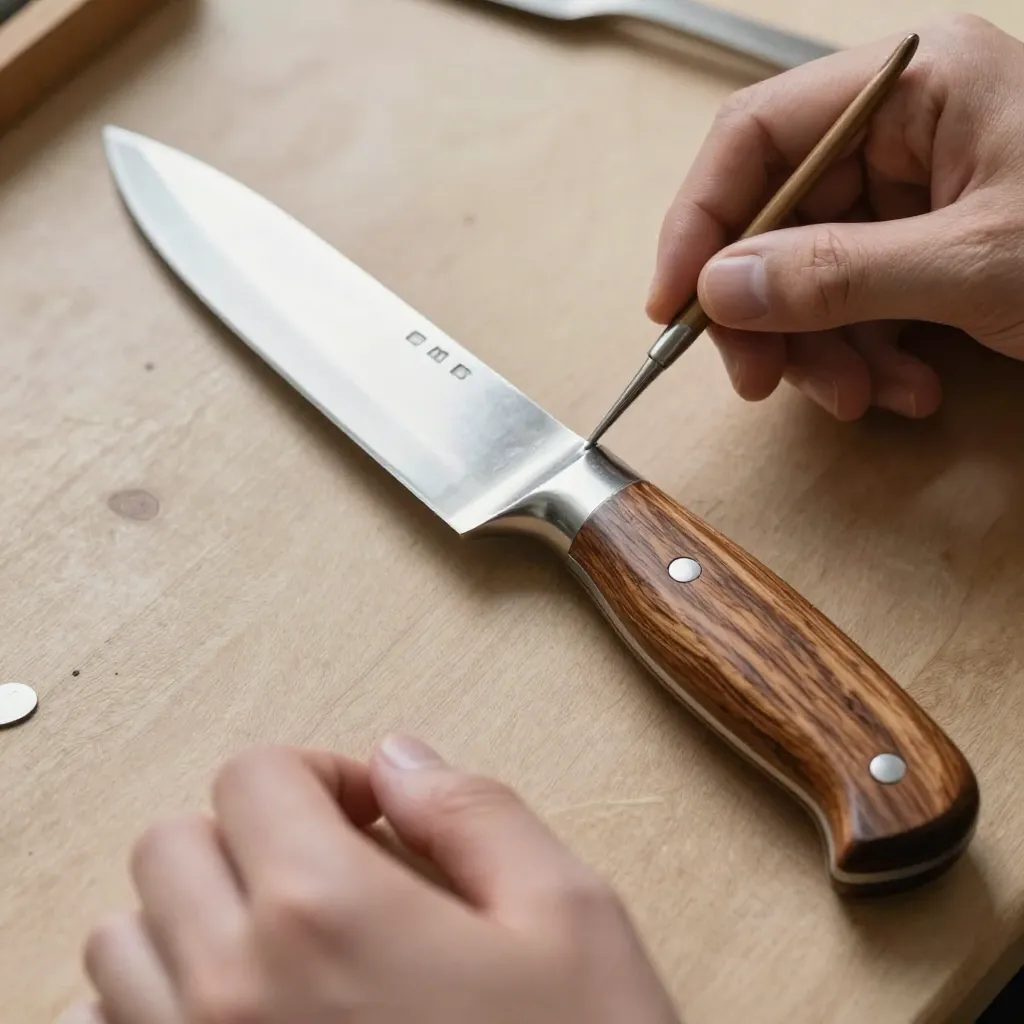
Tool Calibration
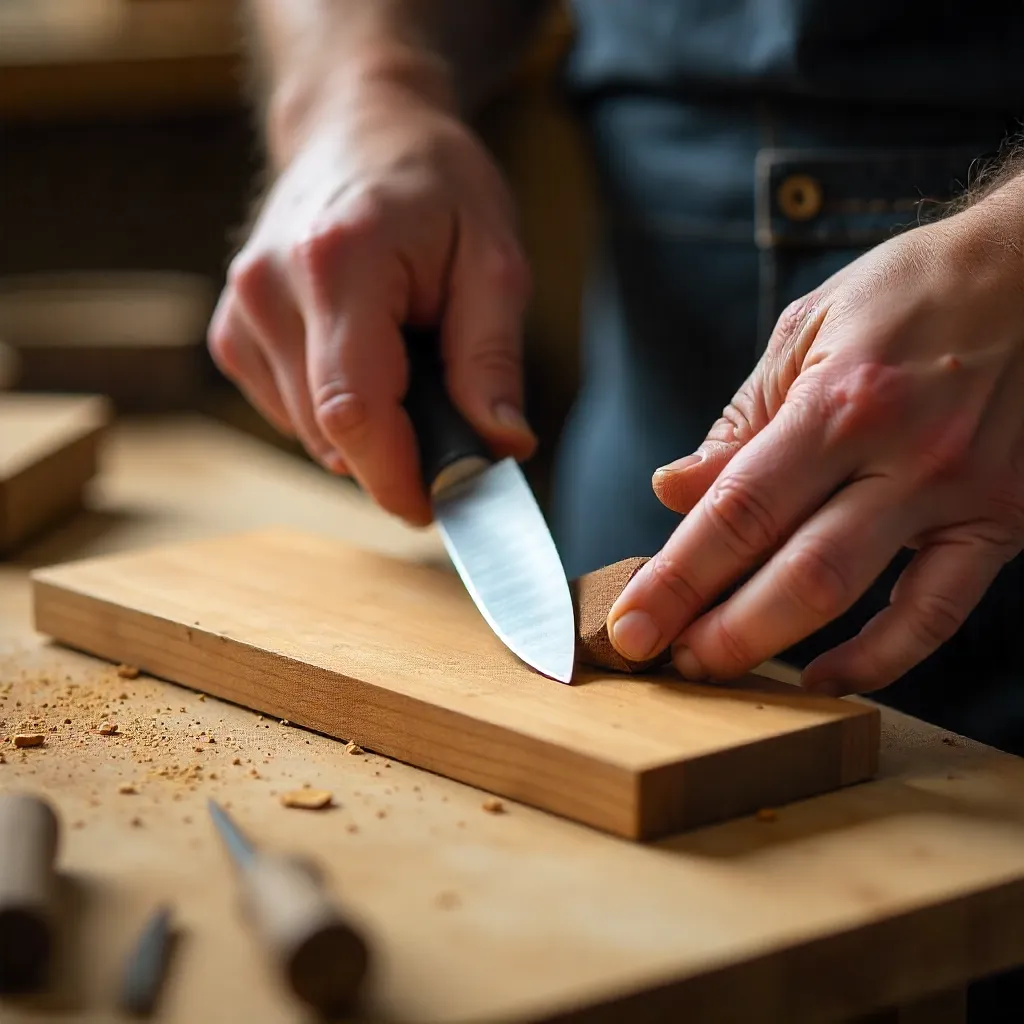
Every tool is calibrated to exacting tolerances. Our workspace maintains controlled humidity and temperature to ensure consistent results throughout the restoration process.
Dimensional Accuracy
Measurements are recorded at multiple stages to verify alignment with original specifications. Fit tolerances are maintained within precise parameters for optimal performance.
Restoration Applications
Kitchen Knives
Chef knives, paring knives, and specialty blades. Each restoration considers the specific cutting tasks and grip requirements.
Utility Tools
Restoration services for various kitchen and workshop tools that require ergonomic handle replacement or repair.
Custom Work
Specialized projects where existing handles need modification or complete replacement to meet specific ergonomic requirements.
Quality Standards
Inspection Protocol
Each completed restoration undergoes multiple inspection points: dimensional verification, joint integrity, surface finish quality, and ergonomic testing. All measurements are documented for reference.
Finish applications are checked for consistency, and handles are tested for comfort and grip stability under simulated use conditions.
Performance Metrics
We evaluate tactile feedback, weight distribution, and balance point location. Every handle is assessed for resistance to moisture, temperature variations, and mechanical stress.
Documentation includes before-and-after specifications, material details, and recommendations for maintenance to preserve restoration quality.
Begin Your Restoration Project
Discuss your knife handle restoration needs. We provide consultation on material selection and restoration approach.
Contact Us